
Organizational transformation projects have historically faced high failure rates, a challenge that is intensifying as the democratization of AI accelerates the pace of change, making agility essential for survival. The primary barrier to successful change is people, and while competencies and skills can be developed, the key to improving agility and outcomes is the professional management of human Behavior. Leaders must move beyond generic values and focus on aligning an individual's Natural Behavior with the Position Behavior required for their role, using professional management tools, or transformation failures will continue.
André Lit

The history of Groupama in Romania is an eloquent testament to resilience, strategic vision, and the transformative impact of innovative management tools. Arriving at the end of 2011 as a new CEO, François Coste faced a highly precarious situation: consolidating three recently acquired, loss-heavy companies. Under his guidance, Groupama in Romania not only quickly became profitable but also became the market leader. This challenge, which François and his team successfully met, highlights leadership and the central role of the GRI (Growth Resources Institute) approach in this metamorphosis.
Frederic Lucas-Conwell
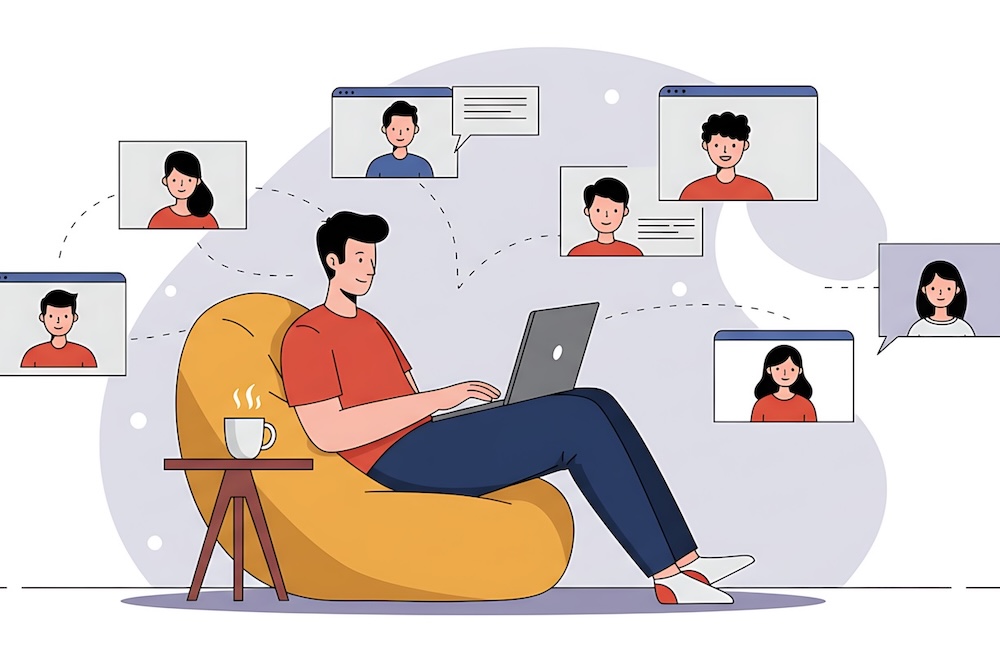
The COVID-19 pandemic has acted as an unprecedented catalyst, radically transforming our approach to work. What was once a marginal practice has become the norm for many companies: remote work and then the hybrid model. This transition, far from being a mere temporary adjustment, has emerged as a lasting paradigm shift, redefining employee expectations and managerial practices.
Frederic Lucas-Conwell

Steve, a brilliant entrepreneur, poured his heart into his work. His team at "Innovatech" was on the brink of a major breakthrough, a new app that promised to revolutionize their industry. Yet, the atmosphere was thick with frustration. Some on the team were stifling creative input, dismissing Steve’s suggestions, and creating unnecessary friction among the members. Steve couldn’t get them to work together.
Frederic Lucas-Conwell

Two years ago, a private company's board witnessed a historic shift, appointing a black woman as Chairperson—a groundbreaking move for diversity. However, despite the outward change, board dynamics remained stagnant, marked by routine and minimal debate. The Chairperson, seeking a transformative shift, aimed to infuse the board with fresh perspectives.
Frederic Lucas-Conwell
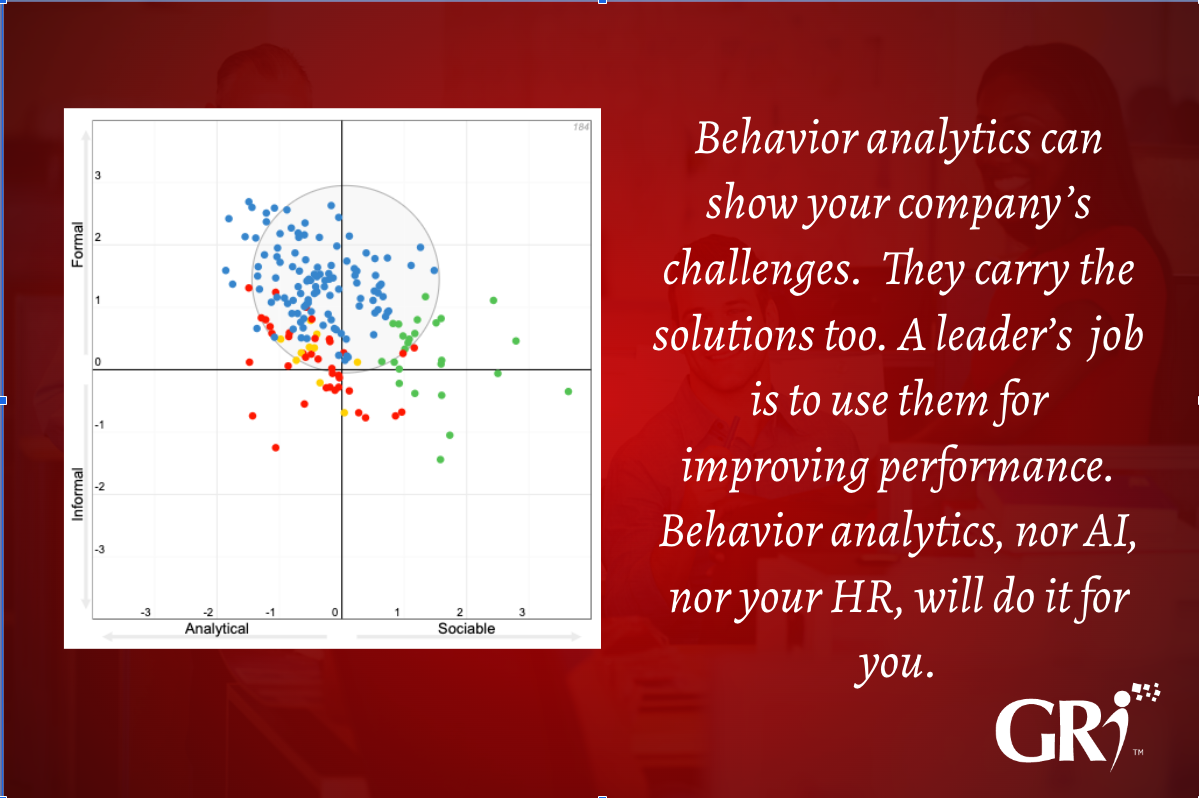
People are often amazed by how much we can learn from a behavior distribution map such as the one below.
You may have guessed that the little dots represent people. The two axes, Informal/Formal and Analytical/Sociable, are two behavior factors among the four we measure at GRI, and along which people’s behaviors are plotted. The colors tell about the primary factor of each person.
Frederic Lucas-Conwell

Several trends have recently gained traction in the workplace, and “quiet hiring” is one of them.
If you are unfamiliar with it, “Quiet hiring" describes a company's filling job openings with current employees without publicizing any vacancy. Additionally, this term is used when a company faces a workload increase, requiring employees to expand their roles, enhance their existing skills, or assume new responsibilities, thus “hiring” them beyond the original contract.
Frederic Lucas-Conwell
With uncertainty in business and personal life following three years of the pandemic, now with geopolitical issues, and daily micro stressors, a leader’s power skills—the new term for people and social skills—become increasingly relevant. They are key to leading through uncertainty. They come in addition to three others: a renewed understanding of self-awareness, co-working with behavior profiles in mind, and recruiting the best candidates. The article emphasizes the need for leaders to understand and support their team members' unique behaviors and establish a common language to facilitate effective communication and understanding. The article concludes that leadership development is a continuous process that must evolve over time to successfully navigate the challenges of an uncertain world.
Frederic Lucas-Conwell, Richard Bell
Change is an inescapable part of life, often unpredictable and daunting. Yet, it can also offer great potential for growth. In this current business environment, characterized by volatility and uncertainty, effective leaders must embrace change as a permanent occurrence and be ready to manage it efficiently. Even if you are not directly planning for a change, you should still be aware of the changes that are happening around you and be prepared to respond accordingly with your team.
Frederic Lucas-Conwell

When recently flying between the East and West coast, I was surprised to be greeted by the pilot. Pilots are usually busy with their checklists before the plane takes off. This time not only did the pilot wait for passengers with the flight attendant, but he also walked later beyond first class to the back of the plane and chatted with passengers in a cordial and engaging way. In my 35+ years of flying long distances that was a first. This atypical situation highlights the skills most in demand for people leaders.
Frederic Lucas-Conwell

The need for purpose in our work is an important part of our behavioral/emotional makeup. Having a purpose to our lives, derived from the work we do, or aligned with our work, is not a new idea. But the modern labor market continues to be uncertain and unstable, and with the recent advent of new information technologies and hybrid work, tenures at companies have dropped dramatically.
Frederic Lucas-Conwell

For too long, organizations have been recruiting and evaluating employees using techniques that are subjective, often flawed, and outdated. We created the Growth Resources Indicators (GRI) to reveal the talents and motivations of individual employees and potential job candidates, and to help organizations use this new information at both team and organization levels.
Frederic Lucas-Conwell
